
Who We Are
Language is the archives of history…fossil poetry
— Ralph Waldo Emerson
Words are more than just little bits of code for communication, they are the product of countless generations that came before us, their customs, aspirations, and creativity. The Linguistics Research Center (LRC) brings that rich past to life through the study of historical languages. In an age saturated with information of often dubious quality, the LRC seeks to provide a wealth of scholarly materials for public use. We are building a rich online ecosystem of free online lessons for learning to read and understand original documents (at present covering some 20 historical languages), online dictionaries with an eye towards new resources for dozens more, as well as plans for carefully curated and presented historical text collections, which will allow even novices to connect with culturally significant works in their original form. We are committed to keeping these materials available online for anyone — researchers and enthusiasts alike — with a desire to connect to their past through language.
Accelerating the Impact of the LRC
Your support will help accelerate work on historical languages and culturally significant texts from around the World. Our ambition is to create a hub for language enthusiasts that spans the globe, with resources for everyone from the language-curious to subject experts. Current active projects in need of support include online etymological dictionary platforms for Indo-European languages (such as Old Norse, Hittite, Ancient Greek and Sanskrit), Mayan languages (including hieroglyphic Mayan and languages still spoken today like K’iche’), Semitic languages (Arabic, Hebrew and many others), and Dravidian (including Old Tamil, Old Telugu, or Malayalam). We are also seeking support to link those dictionaries to expert-annotated digital editions of culturally significant texts: from the Old Norse Sagas to the Rig Veda, the Arabian Nights or the K’iche’ Popol Vuh. In addition, through your donations we will help prepare the next generation of digital scholars, as the undergraduate and graduate students assisting us build their skills and portfolios working on large scale Digital Humanities projects.
Reconstructing Vocabulary Reconstructs Cultures
Words form the fabric through which we weave both our own internal and our external expressions of individual and societal experience. Through words we imprint on the world our sense of what we see and what can be seen. The exploration of word etymologies, lineages that trace connected words back to a common parent, provides insight into how cultures have changed and exchanged these conceptions over time and space. At the same time, as we combine words into text, we conjure in others a shared sense of identity and belonging, constructing the narratives that form the bonds of our combined efforts and shared self-conceptions. The LRC strives to create a historical linguistic ecosystem where investigators and enthusiasts can see from a range of vantage points the historical sweep of language and culture. While the Indo-European Lexicon (IELex) focuses on the minute details of individual words, and the lessons of the Early Indo-European OnLine (EIEOL) collection provides a window into the eloquence of original texts, there is much more in store for users of the LRC’s resources.
What We’re Fundraising For
The LRC is currently working toward a dramatic expansion of our lexical offerings with a range of initiatives. At the same time, we’re continuing to add to our online collection of language lessons. Both of these directions for advancement not only serve a public broadly interested in linguistic and cultural history and evolution, but also provide numerous opportunities for undergraduate and graduate students to participate and build up their skills and portfolios in Linguistics, Computer Science, and Digital Humanities.
Lexica: Dictionaries Interwoven through an Etymological Core
The planned upgrades to IELex focus on improving and expanding the capabilities of the computational architecture used to create the online resource. This underlying Lex system automatically takes data on individual languages and their etymological relationships and builds it out into a collection of interwoven dictionaries linked through a core etymological dictionary and deployed online for users to peruse. Our current data allows us to build a system focused on the Indo-European languages. But different data will facilitate creation of similar resources for different language families. A handful of major projects will take us in new directions.
MayaLex: Interlinked Dictionaries of Early Mayan Languages
A grant from the National Endowment for the Humanities (NEH) supported the early stages of collecting data for, and testing the functionality of MayaLex, a preliminary collection of dictionaries for ancient Mayan languages. With changes to the funding landscape, we now need your support to help get this initiative to production.
Conversing with the Ancients — in Their Own Words!
Individual words of ancient languages provide the tools with which early societies constructed their understanding of the world around them. But it is through text — broadly understood as recordings of utterances — that the ancients truly sculpted a worldview. We only begin to form a clear picture of the ancients’ perspectives when we engage with their records on their own terms: through direct access to the original words, without the imposition of a fixed translation. Among the LRC's resources, theEarly Indo-European OnLine (EIEOL) collection of language lesson series plays a central role. These series introduce readers to numerous languages on each of the major branches of the Indo-European linguistic family tree.
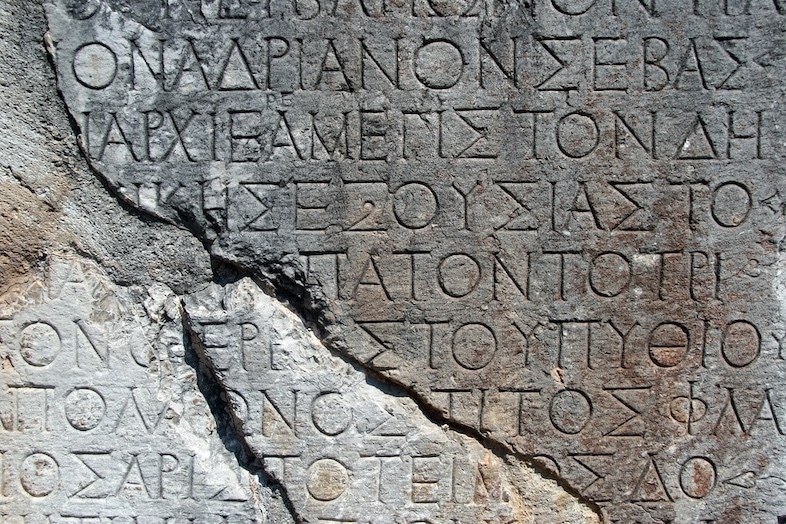
Through the newest addition to our online resources, the Text Collections, the LRC will give specialists and non-specialists direct access to the timeless documents of early cultures. These will include representative extracts from texts which form cultural touchstones and repositories of historical perspectives and beliefs. These will range from extracts within the major religious traditions (as of the Torah, Quran, and Bible), to wide-ranging astronomical and scientific texts (such as Mayan codices and Indic treatises), to major artistic and poetic works (such as early Chinese poetry and extracts of the Homeric tradition). Each element of the collection will provide an original, unsimplified ancient text, where each individual word has been analyzed for its linguistic form and individual meaning. An accompanying translation will help readers understand how the individual pieces fit together into a narrative whole. Where etymologies are known, each word will link back to the etymological dictionaries, so users can trace the shades of meaning accumulated throughout history and their relations to allied concepts in other languages and cultures.
.
SemitiLex: Interlinked Dictionaries of Early Semitic Languages
Another language group of critical importance is the Semitic family, containing not only Arabic and Hebrew, but other ancient languages from Ethiopia, Babylonia, and elsewhere. Important documents in Semitic languages include fundamental texts from all the Abrahamic religions. While scholars have pored over these languages for centuries, and they have even produced several online resources, few of them facilitate comparison of lexical and other linguistic structures among different members of the family, and even fewer help make their vocabularies transparent to non-specialists. The SemitiLex project has begun the long, but important, task of creating updated dictionaries that both facilitate new and interesting directions of research, and at the same time open up the details and histories of these languages to a wider audience.
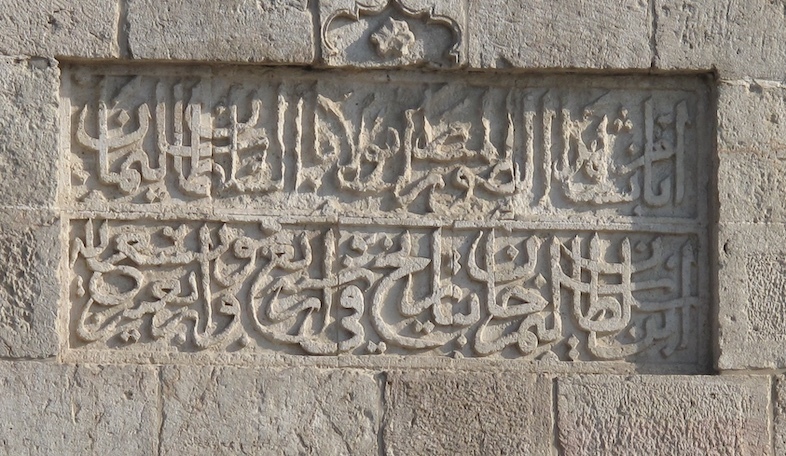
DravidiLex: Interlinked Dictionaries of Dravidian Languages
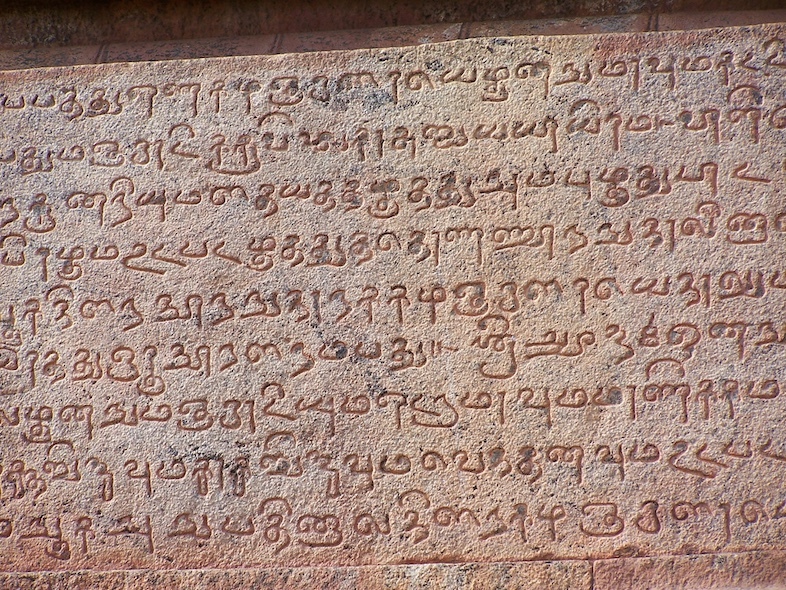
The Dravidian language family includes numerous languages whose speakers are most populous in the southern regions of the Indian subcontinent. These languages have a long history of interaction with the Indo-Aryan languages to their north. Moreover, they display a documented history roughly as expansive as these northern neighbors. Yet modern scholarship on the Dravidian languages is hampered by a lack of dedicated resources of high quality and broad coverage of the language family. DravidiLex seeks to provide a foundation for deep and far reaching study of these languages, while at the same time providing a welcoming resource for speakers of Dravidian languages and for enthusiasts from a wide range of backgrounds.
UtoAztecaLex: Interlinked Dictionaries of Early Uto-Aztecan Languages
The Uto-Aztecan languages collect a wide range of languages spoken throughout much of Mesoamerica and in large swathes of the southwestern United States. The language family includes Classical Nahuatl, the language of the Aztec empire and whose modern form is still spoken today. But it also includes languages of other Indigenous peoples who have contributed dramatically to the intricate and varied history of the Americas, such as the Hopi, Comanche, and Shoshone. UtoAztecaLex will provide a scholarly resource where scholars and non-specialists alike can trace the linguistic relationships among these fascinating peoples and ensure a deepening understanding of their cultural treasures.
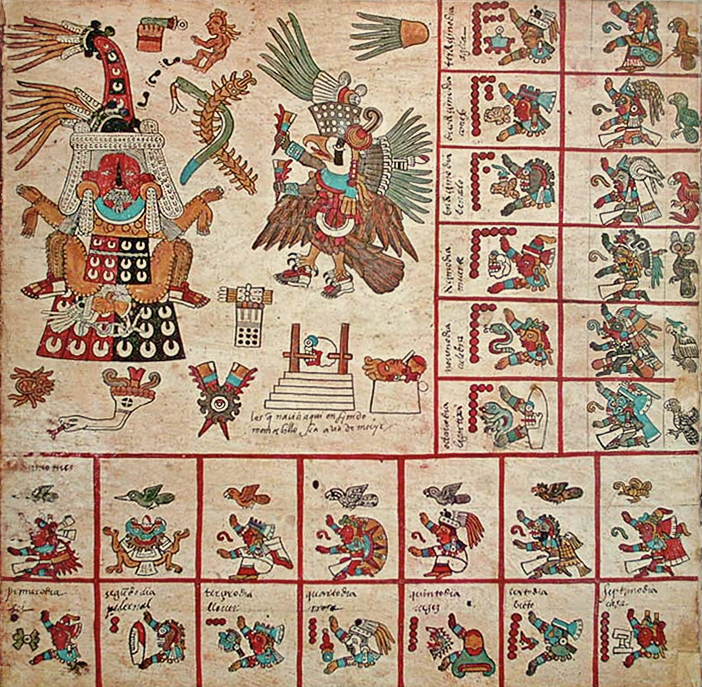
Through the newest addition to our online resources, the Text Collections, the LRC will give specialists and non-specialists direct access to the timeless documents of early cultures. These will include representative extracts from texts which form cultural touchstones and repositories of historical perspectives and beliefs. These will range from extracts within the major religious traditions (as of the Torah, Quran, and Bible), to wide-ranging astronomical and scientific texts (such as Mayan codices and Indic treatises), to major artistic and poetic works (such as early Chinese poetry and extracts of the Homeric tradition). Each element of the collection will provide an original, unsimplified ancient text, where each individual word has been analyzed for its linguistic form and individual meaning. An accompanying translation will help readers understand how the individual pieces fit together into a narrative whole. Where etymologies are known, each word will link back to the etymological dictionaries, so users can trace the shades of meaning accumulated throughout history and their relations to allied concepts in other languages and cultures.
Lesson Series: Immersing Ourselves in Language & Culture
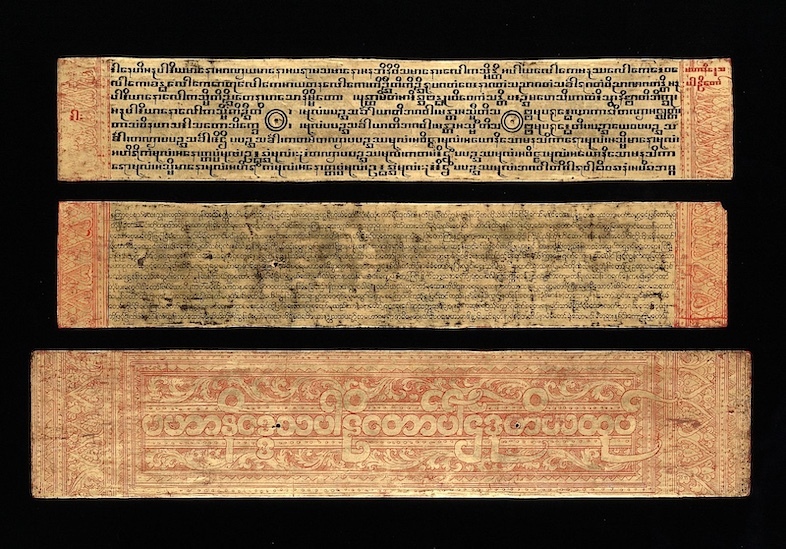
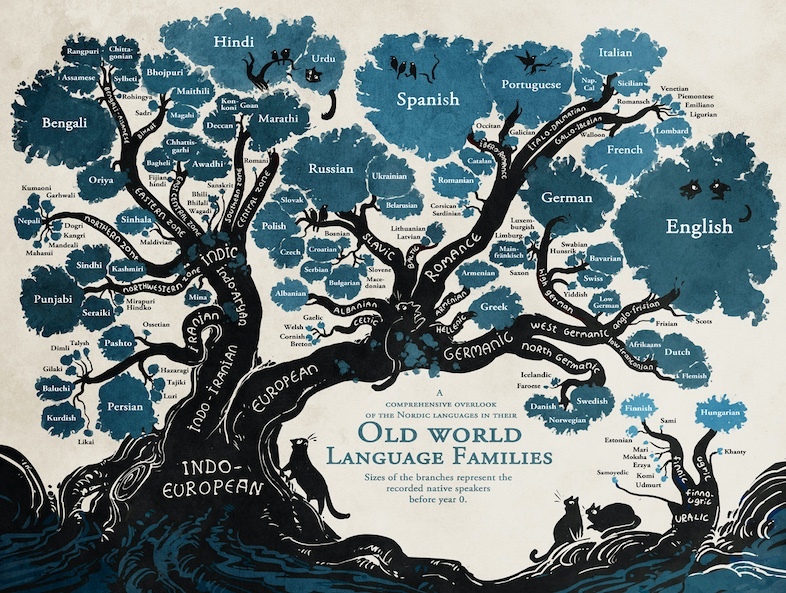
The EIEOL collection helps users take a deep dive into a small number of selected text excerpts from the earliest Indo-European languages. In each lesson an introduction situates the text in its broader cultural and historical context. But over an entire lesson series readers receive an introduction to all major aspects of a language’s grammatical structure. Current offerings introduce the earliest attested languages in every major branch of Indo-European, such as Vedic Sanskrit on the Indo-Iranian branch, Old Norse in the Germanic group, and Hittite on a lonely branch from Anatolia. Some series even show evolution within a sub-family over time: the history of the Romance languages launches with a lesson series on Latin and continues with a separate series on Old French. The creation of the EIEOL collection has taken years of painstaking work, and the low-hanging fruit of introducing the major representatives of each sub-family has been plucked. Now we are embarking on the harder task of filling in the smaller branches of the family tree: languages less familiar, with fewer available materials for learning by non-specialists, or even for specialists.
Specifically we seek support for three major initiatives:
- To finish additional lesson series currently under development on
- Old Italian — read the words of Dante, Petrarch, and Boccaccio in their original language,
- Pali — read the teachings of the Buddha in the earliest documents that record his original words,
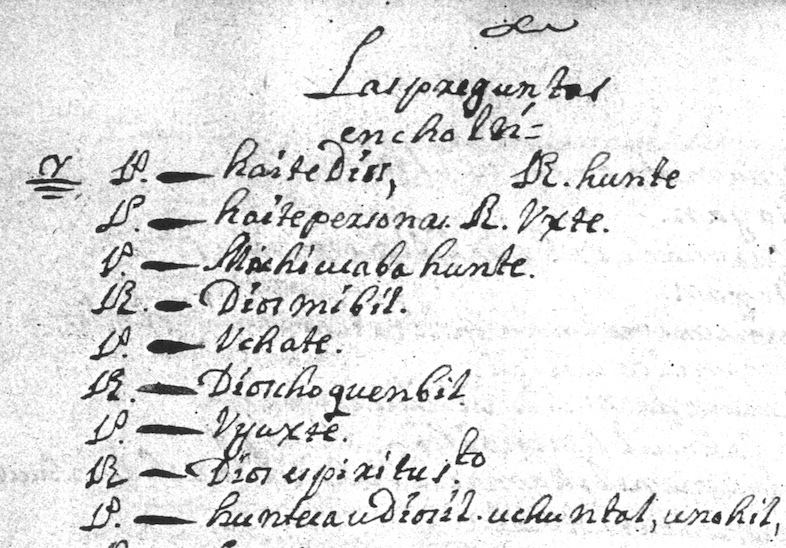
- Colonial Ch'olti' — as we expand our scope to ancient languages of the Americas, look to the indigenous Mayan languages of the New World with some of the rarest texts of the Colonial period;
- To add audio recitations to our ancient annotated texts, a feature we have already piloted for Old English and Old Norse, but which will involve hard work to implement for the remaining 15 series;
- To add videos as introductions to languages and their documents, as well as to provide short overviews of special topics, like the innovative forays of the Sign Change project into the historical linguistics of signed languages.
Your Impact
Specific Aims
The creation of online language materials requires a very particular skillset, combining linguistic knowledge, computational skills, and pedagogical understanding, among other things. Rarely does a particular major or department provide more than superficial acquaintance with more than one of these skills. The LRC therefore places particular emphasis on involving students at all stages of their studies in the process of learning how to plan, craft, deploy, and maintain large-scale Digital Humanities projects.
At the same time, some features of a project can become so technical that they require the highly specialized abilities of professional programmers. Your contributions will help us acquire this support and also contribute to maintaining an LRC staff that can translate institutional knowledge and project goals into technical requirements to be implemented by the computational staff.
Finally, lessons and dictionaries don’t write themselves. They are not even the product of a single individual. Rather, the dictionary data and lesson content created by specialists in the respective fields must go through a rigorous process of editing and be crafted to meet project aims. Your contributions also support a dedicated staff of content editors and project managers who ensure that scholarly content reaches users in an understandable, engaging, and useful way.
Broader Impact & Testimonials
Your financial contributions not only help the LRC, but they support a mission that serves a large international community of users extending far beyond the walls of academia. Have a look at some of the comments from our users:
"Are you kidding me? This is one of the best free resources available to us ancient language enthusiasts!"
Sometimes our resources support users in the most unexpected ways:
"Absolute lifesaver, I love this site to bits, don't ever leave. I am a hobbyist and a writer of fantasy fiction who uses your linguistic resources on the lesser-known Indo-European cultures. I don't have access to a university library or the budget to buy every linguistics textbook ever written. You're doing exactly what universities should be doing in bringing quality materials online for free and I can't possibly thank you enough."
Some find our site totally unique:
"Fantastic site! Nothing similar anywhere!"
And we happen to agree. Still others would like to see our materials expand to include ever broader audiences:
"The website has an impressive collection of resources. They are extremely useful in finding information about ancient languages. I wondered if I could have a permission to translate some extracts of the Old Russian course into Russian/Ukrainian."
Whatever our users' interests, we just aim to give them the tools they need:
"What an incredible gift this is! Thank you for making the world a better place."
Help us expand our online resources. Help us provide free resources for anyone with an interest in languages and the crucial role they play in understanding the history of culture, society, religion, and a host of other fascinating aspects of human development.
Gifts to College of Liberal Arts - Linguistics Research Center contribute to...
Advocates 📣
Community Advocates
Generated 4265 clicks and 310 gifts, totaling $35,401Soh Nishiyama
Generated 306 clicks and 116 gifts, totaling $19,672Luke Mastrian
Generated 346 clicks and 233 gifts, totaling $18,348David Griffin
Generated 170 clicks and 61 gifts, totaling $11,515Randall Ford
Generated 119 clicks and 16 gifts, totaling $5,825Anna Boxall
Generated 445 clicks and 21 gifts, totaling $3,765Mark Carella
Generated 153 clicks and 18 gifts, totaling $3,717Victoria Mena
Generated 97 clicks and 7 gifts, totaling $3,560Sam Zarou
Generated 72 clicks and 21 gifts, totaling $3,260Katelyn Rood
Generated 274 clicks and 16 gifts, totaling $3,233
Advocates, you have until 10:00 p.m. CST to solidify your rankings. Good luck!
Gift Count Leaders
1. Luke Mastrian – 232
2. Soh Nishiyama – 116
3. David Griffin – 59
4. Jacob – 38
5. Rizky Pratama – 29
Dollars Raised Leaders
1. Soh Nishiyama – $19,672
2. Luke Mastrian – $18,338
3. David Griffin – $11,414.60
4. Randall Ford – $5,675
5. Mark Carella – $3,717
Winners will be announced on May 1.
161 days ago by Pablo MoraLonghorns, this is the final sprint of 40 Hours for the Forty Acres!
Make your final gift now and help push us across the finish line at 10:00 p.m. CST.
Competing on a leaderboard? Every gift and share can still change the standings and this is your last chance to claim advocate incentives.
161 days ago by Pablo MoraFinal hour, Advocates! Nothing is locked in! Every share and every gift can still change the leaderboard. The top five advocates in each challenge earn extra match dollars for the designation of their choice.
Gift Count Leaders
1. Luke Mastrian – 231
2. Soh Nishiyama – 116
3. David Griffin – 59
4. Jacob – 38
5. Leonard Ali Wako Memon – 25
Dollars Raised Leaders
1. Soh Nishiyama – $19,672
2. Luke Mastrian – $18,288
3. David Griffin – $11,414.60
4. Randall Ford – $5,675
5. Mark Carella – $3,717
One final update will be placed on the 40 for Forty site at 9:30 p.m. CST.
161 days ago by Pablo MoraHere’s where things stand right now in our Advocate Challenges. Every share and every gift counts, nothing is locked in yet. Remember that the top five advocates for each challenge get additional match dollars for a designation of their choice.
Current Leaders
Advocate Challenge: Gift Count Highlighting the advocates who have generated the highest number of gifts so far:
1. Luke Mastrian - 189 gifts
2. Soh Nishiyama - 76 gifts
3. David Griffin - 48 gifts
4. Jacob - 27 gifts
5. Leonard Ali Wako Memon - 23 gifts
Advocate Challenge: Dollars Raised Highlighting the advocates who have generated the highest cumulative dollars so far:
1. Soh Nishiyama - $13,950
2. Luke Mastrian - $13,428
3. David Griffin - $9,695
4. Randall Ford - $5,475
5. Mark Carella - $3,567
Huge thanks to our advocates who are pushing hard and setting the pace. Leaders, defend your spot as we make our way to the 10:00 p.m. CST finish line!
161 days ago by Pablo MoraWe’re excited to share a snapshot of the current standings in our two Advocate Challenges during 40 Hours for the Forty Acres. These rankings reflect where things stand right now and there’s still plenty of time to keep moving up! Remember that the top five advocates in each challenge get additional match dollars for a designation of their choice.
Advocate Challenge: Gift Count Highlighting the advocates who have generated the highest number of gifts so far:
1. Luke Mastrian - 156 gifts
2. Soh Nishiyama - 35 gifts
3. David Griffin - 26 gifts
4. Jacob - 18 gifts
5. Leonard Ali Wako Memon - 15 gifts
Advocate Challenge: Dollars Raised Highlighting the advocates who have generated the highest cumulative dollars so far:
1. Luke Mastrian - $8,943
2. Soh Nishiyama - $5,960
3. David Griffin - $4,945
4. Randall Ford - $4,375
5. Emily Quigley - $2,376
A huge thank you to everyone who has already stepped up as an advocate. Your outreach, enthusiasm, and commitment are powering 40 Hours for the Forty Acres.
Keep sharing your links, keep spreading the word, and keep up the great work, we can’t wait to see how these leader boards shift as we approach the finish on April 30 at 10 p.m. CST!
162 days ago by Pablo Mora